Ontem a 2: passou o último episódio da excelente série Six Feet Under da HBO. Não posso deixar de fazer uma "vénia" a esta série do mesmo autor de American Beauty, Alan Ball. O último episódio, nos seus minutos finais "tresanda" ao mesmo ambiente do filme que notabilizou Ball. Decidi procurar no Youtube e lá estavam esses minutos finais do episódio, a qualidade não é a melhor, mas ainda assim vale a pena ver.
Claire, a mais jovem dos irmãos Fischer, parte para NY à procura de uma carreira como artista no seu Toyota Prius. As imagens da sua viagem são intercaladas com outras da família que fica para trás, uma familia assombrada pela proximidade com a morte com que sempre viveu. Os membros da familia vão envelhecendo, a sua mãe morre em 2025, o seu irmão casa-se com o namorado mas mais tarde acabam de novo separados, etc!...
http://www.youtube.com/watch?v=9iTj2KUnXS4
11.7.06


10.7.06
Links: 10/07/2006
 sharethetruth - de Lawence Lessig
nova-mind - Sobre Mind Maps
the next web conference
Aula
A-listers are irrelevant
Visual Information Procesing Lab
on the table top
Ask Tog - Interaction Design Solutions for the Real World
Novas metáforas de interface
No seguimento do post do mês passado com o título "BumpTop 3D Desktop Prototype", venho aqui "filtrar" mais alguma informação sobre o assunto. Paulo Querido foi "empurrado"
para um blog do Expresso deixando papel livre na Única, e a semana passada falou-nos de interfaces gráficos em Queremos um desktop mais ergonómico Neste artigo/post fala do mesmo BumpTop 3D e de outros como o "stacks" da Apple patenteado há já alguns anos. (ver descrição).
"The patent was filed in 1994, but has gained interest with recent rumors that the next major revision of Mac OS X (Panther) will utilize this design."
A ideia geral do artigo é a de que a metáfora de secretária como interface está a ficar um pouco ultrapassada, e existem investigadores a tratar do problema.
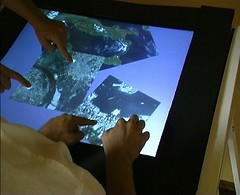
Enquanto isso, o Nicolas Nova, do Pasta and Vinegar, continua a filtrar boa informação na Web e reporta um interface muito interessante chamado tabulaTouch, penso que as imagens falam por si:


para um blog do Expresso deixando papel livre na Única, e a semana passada falou-nos de interfaces gráficos em Queremos um desktop mais ergonómico Neste artigo/post fala do mesmo BumpTop 3D e de outros como o "stacks" da Apple patenteado há já alguns anos. (ver descrição).
"The patent was filed in 1994, but has gained interest with recent rumors that the next major revision of Mac OS X (Panther) will utilize this design."
A ideia geral do artigo é a de que a metáfora de secretária como interface está a ficar um pouco ultrapassada, e existem investigadores a tratar do problema.
Enquanto isso, o Nicolas Nova, do Pasta and Vinegar, continua a filtrar boa informação na Web e reporta um interface muito interessante chamado tabulaTouch, penso que as imagens falam por si:

8.7.06
O tempo de vida de uma noticia online
 Já sabemos que a informação na web anda muito rápido! Mas que o tempo de vida de uma notícia era de apenas 36 horas!...
É o resultado de um estudo efetuado por físicos, como Albert-Lászlo Barabási, que estudaram um portal de noticias muito popular na Hungria (origo.hu).
"Most news becomes old hat within a day and a half of being posted"
"The average half-life of a news item is just 36 hours, or one and a half days after it is released."
O estudo conclui ainda que os leitores podem perder uma parte significante da informação se não visitarem o portal com mais frequência. É aqui que entram em cena as newsletters de distribuição por e-mail ou os feeds de RSS, puxando a atenção dos leitores indo de encontro com os mesmos.
Outra conclusão interessante é que em geral o tempo de vida de uma notícia não depende do seu conteúdo. Esta característica é parte do funcionamento das redes em si.
"...the decay laws identified are likely to be generic because they do not depend on content, but are manly determined by a user's visiting and browsing patterns."
Artigo: Are you reading the news?
7.7.06
Links sublinhados
É uma velha questão nos meandros da Usabilidade.
Uns, como Jakob Nielsen, defendem que os links devem ser textuais e sublinhados (e já agora, azuis também...), outros como Jared Spool não são tão fechados a outras soluções.
Na minha opinião penso que não podemos deixar de nos lembrar que há medida que os anos passam, os utilizadores estão cada vez mais instruídos na forma de navegar nos interfaces, por isso um pouco de inovação não faz mal a ninguém! Caso contrário não se evolui!... é que os designers de interfaces gráficos possuem também um papel a desempenhar na evolução da informação gráfica disponível online.
Via GUUUI: Do links need to be underlined?
Uns, como Jakob Nielsen, defendem que os links devem ser textuais e sublinhados (e já agora, azuis também...), outros como Jared Spool não são tão fechados a outras soluções.
Na minha opinião penso que não podemos deixar de nos lembrar que há medida que os anos passam, os utilizadores estão cada vez mais instruídos na forma de navegar nos interfaces, por isso um pouco de inovação não faz mal a ninguém! Caso contrário não se evolui!... é que os designers de interfaces gráficos possuem também um papel a desempenhar na evolução da informação gráfica disponível online.
Via GUUUI: Do links need to be underlined?
6.7.06
YearlyKos Conference Portends Democracy 2.0
Do texto seleccionei algumas citações que achei mais interessantes:
"Similarly, online tools and communities have long (by our standards) held the promise of creating a more level playing field for our politics. A major milestone in the achievement of this level-playing field promise was attained in June at the seminal offline event of the Netroots, the inaugural Yearly Kos conference in Las Vegas."
Sobre os Mass Media:
"...is that mass media plays a decisive role in shaping perceptions of political prospects, whether in the form of journalism, op-editorial, paid advertisement, or Foxaganda"
"Mass media is antithetical to the Wisdom of Crowds in, well, its massiveness, its unidirectional nature, and the fact that a small number of wealthy citizens and corporations (actually there is little legal difference in the US) have a disproportionately large impact on what mass media publishes… Only so many voices can be represented in aggregate and with only so much nuance, and thus the vast majority of the voices in our Crowd are never heard through Mass Media."
"Similarly, online tools and communities have long (by our standards) held the promise of creating a more level playing field for our politics. A major milestone in the achievement of this level-playing field promise was attained in June at the seminal offline event of the Netroots, the inaugural Yearly Kos conference in Las Vegas."
Sobre os Mass Media:
"...is that mass media plays a decisive role in shaping perceptions of political prospects, whether in the form of journalism, op-editorial, paid advertisement, or Foxaganda"
"Mass media is antithetical to the Wisdom of Crowds in, well, its massiveness, its unidirectional nature, and the fact that a small number of wealthy citizens and corporations (actually there is little legal difference in the US) have a disproportionately large impact on what mass media publishes… Only so many voices can be represented in aggregate and with only so much nuance, and thus the vast majority of the voices in our Crowd are never heard through Mass Media."
4.7.06
Have fun with Google
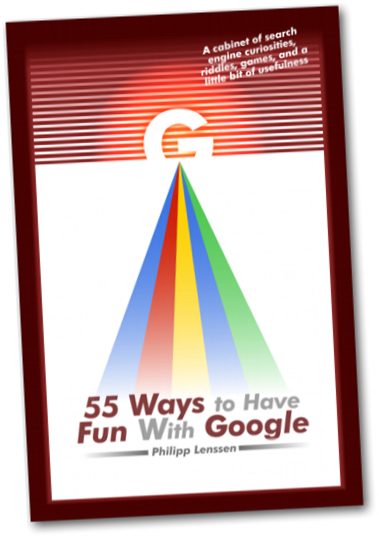 Pelos vistos, são 55, as formas de nos divertirmos com o Google. Ainda não li, mas já tenho o PDF...
http://www.55fun.com/
mnemomap.org
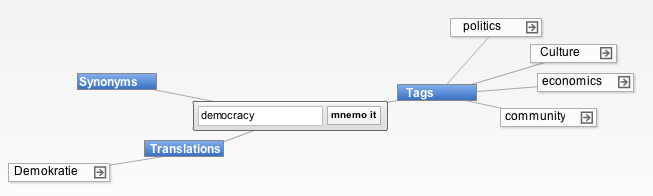 o mnemomap parece-me uma forma interessante de se fazer buscas na Internet. Vamos ver no futuro se esta tecnologia se impôe...
Basicamente este motor de busca socorre-se de tecnologias de redes sociais e motores de busca, tal como indica em About no mesmo site: "mnemomap is a new way to search the internet. It combines technologies of social networking, search engines and other data sources to help you formulate search queries and find really relevant information."
Para compreender ainda melhor o funcionamento deste motor de busca, fui ver a entrada da Wikipedia sobre Mnemónica, que afirma simplesmente que se refere a uma ajuda de memória, vale a pena ler ainda a versão inglesa (Mnemonic) mais completa.
Via: Information Aesthetics
3.7.06
O Dedo como Interface!
 Mais uma vez o Nicolas Nova nos traz um interface muito interessante. Desta vez o dedo serve de interface Homem-Computador.
Lembro-me que o ano passado foi feita uma experiência muito semelhante com um interface para um quiosque de um jornal chinês na Ydreams, projecto no qual tive o prazer de participar. Embora me pareça que recorrendo a tecnologias diferentes... Mas o resultado final que tive oportunidade de observar ainda em fase de testes era muito interessante e cheio de potencialidades, especialmente na aplicação em quiosques interactivos em espaços públicos, ou novos suportes publicitários, que parece ser o caminho que a Ydreams está a trilhar... e bem!
Mas voltando a este "dedo interactivo", o Nicolas descreve-o no seu blog: "A curious hand/finger tracking system is described in Smart Laser Scanner for Human-Computer Interface by Alvaro Cassinelli, Stephane Perrin & Masatoshi Ishikawa"
2.7.06
Mudanças na linguagem...
A bolha cresce - a da Web 2.0 - e a língua, viva, transforma-se!
A quantidade de novos termos que surgem é fascinante e desta vez o termo é: Freedbacking
O artigo na Wired "Are You 'Freedbacking'? " faz uma introdução ao termo.
"A new word is rippling up through the blogosphere: It's called "freedbacking" and it's generating some buzz among software developers looking to find new ways to connect with users and glean feedback on their work."
A quantidade de novos termos que surgem é fascinante e desta vez o termo é: Freedbacking
O artigo na Wired "Are You 'Freedbacking'?
" faz uma introdução ao termo."A new word is rippling up through the blogosphere: It's called "freedbacking" and it's generating some buzz among software developers looking to find new ways to connect with users and glean feedback on their work."
Barcamp Portugal 2006

A realizar nos dias 25 e 26 de Agosto, o Barcamp Portugal 2006 será um evento a não perder. Em barcamp.org encontramos a definição destes eventos:
"BarCamp is an ad-hoc gathering born from the desire for people to share and learn in an open environment. It is an intense event with discussions, demos, and interaction from attendees."
1.7.06
My Office 2.0
Podemos retirar todo o software do nosso computador, pois a diversidade de aplicações web que podem substituir as aplicações que temos localmente já o permite. Essa é a proposta do autor desta listagem:
My Office 2.0
http://itredux.com/blog/office-20/
My Office 2.0
http://itredux.com/blog/office-20/
28.6.06
26.6.06
25.6.06
Links sobre Crowdsourcing
Mais uma das facetas da Inteligência colectiva das massas de pessoas conectadas em aplicações sociais.
O outsourcing das empresas virou Crowdsourcing, onde cada utilizador na Web é um potencial consultor externo especializado em algo específico. O Google já possui uma plataforma que dinamiza este tipo de serviços o Google Answers
www.crowdsourcing.com
The Rise of Crowdsourcing
Wikipedia; Crowdsourcing
Fonte: Paulo Querido. Crowdsourcing: mão-de-obra em rede, Única - Expresso.
O outsourcing das empresas virou Crowdsourcing, onde cada utilizador na Web é um potencial consultor externo especializado em algo específico. O Google já possui uma plataforma que dinamiza este tipo de serviços o Google Answers
www.crowdsourcing.com
The Rise of Crowdsourcing
Wikipedia; Crowdsourcing
Fonte: Paulo Querido. Crowdsourcing: mão-de-obra em rede, Única - Expresso.
24.6.06
A Internet das coisas
 No suplemento Economia, do Expresso de hoje, podemos ler um pequeno artigo sobre a revolução próxima da Internet das coisas, baseada na tecnologia RFID - Identificação por Rádio Frequência.
Segundo o artigo, a ideia era que esta tenologia substituísse os códigos de barras, mas as suas aplicações são cada vez mais vastas. O Casino Lisboa aplica RFID nas fichas a circular dentro do próprio casino.
Nicolas Nova, aborda este tema frequentemente no seu blog que vale a pena seguir.
A ITU, International Telecommunication Union, sedeada em Genebra e ligada às Nações Unidas editou um report, The Internet of Things, que é uma leitura obrigatória sobre RFID.
20.6.06
Como construir grandes equipas!
 A revista Fortune editou um artigo, "How to build a great team", do qual a DIA D desta semana faz eco. O tema anda nas bocas do mundo, e eu como parte interessada em estudar as ferramentas online que ajudam a cooperação/tomadas de decisão em equipa, fico satisfeito por ver que a revolução que começou com a Web 2.0 se espalha a outras àreas da sociedade: Gestão, Marketing/Publicidade, I&D, etc...
"Harmony. Cooperation. Synchronized effort. It's difficult, but it can be learned. Watch the great teams very closely - and then join one of your own." Diz a Fortune.
Isnpirado pelo artigo, ou talvez não, alguém fotografou dois cães a cooperarem na busca de um simples... pau! :) Os animais fazem-no desde sempre, e o Homem não escapa a esse instinto! porque não passarmos a fazer o mesmo no trabalho, em investigação ou até em lazer!!! cooperar! A economia Portuguesa agradecia, e nós íamos mais felizes para casa ao fim do dia!
19.6.06
18.6.06
As Newsletters são mais apelativas que os sites
Num estudo do Nielsen/Norman Group conclui-se que as Newsletters enviadas por e-mail são mais apelativas para os utilizadores, do que os sites. Até aqui tudo bem, não me surpreende este resultado uma vez que é o reflexo de uma livre escolha (em princípio) da parte do utilizador em receber a mesma Newsletter.
Ainda assim gostaria de obter resultados numa comparação com os feeds de RSS, apesar de a Newsletter permitir, do ponto de vista de marketing, mais liberdade na personalização dos conteúdos.
Via: problogger
Ainda assim gostaria de obter resultados numa comparação com os feeds de RSS, apesar de a Newsletter permitir, do ponto de vista de marketing, mais liberdade na personalização dos conteúdos.
Via: problogger

12.6.06
11.6.06
Inovação Aberta II

Seguindo a linha de pensamento de posts anteriores sobre Inovação Aberta, recebi via RSS feed este excelente post no blog Creating Passionate Users.
Penso que a ilustração é auto-explicativa de ideia que tenho vindo a apresentar. O artigo incide nas diferenças entre pessoas que partilham o conhecimento e as que retém esse mesmo conhecimento.
"It's our implementation, not our idea that matters"
Partindo desta frase, o autor acrescenta que aquilo que realmente interessa, não são as ideias que temos, mas sim o que as ideias podem fazer por nós!
8.6.06
O Terror numa moldura
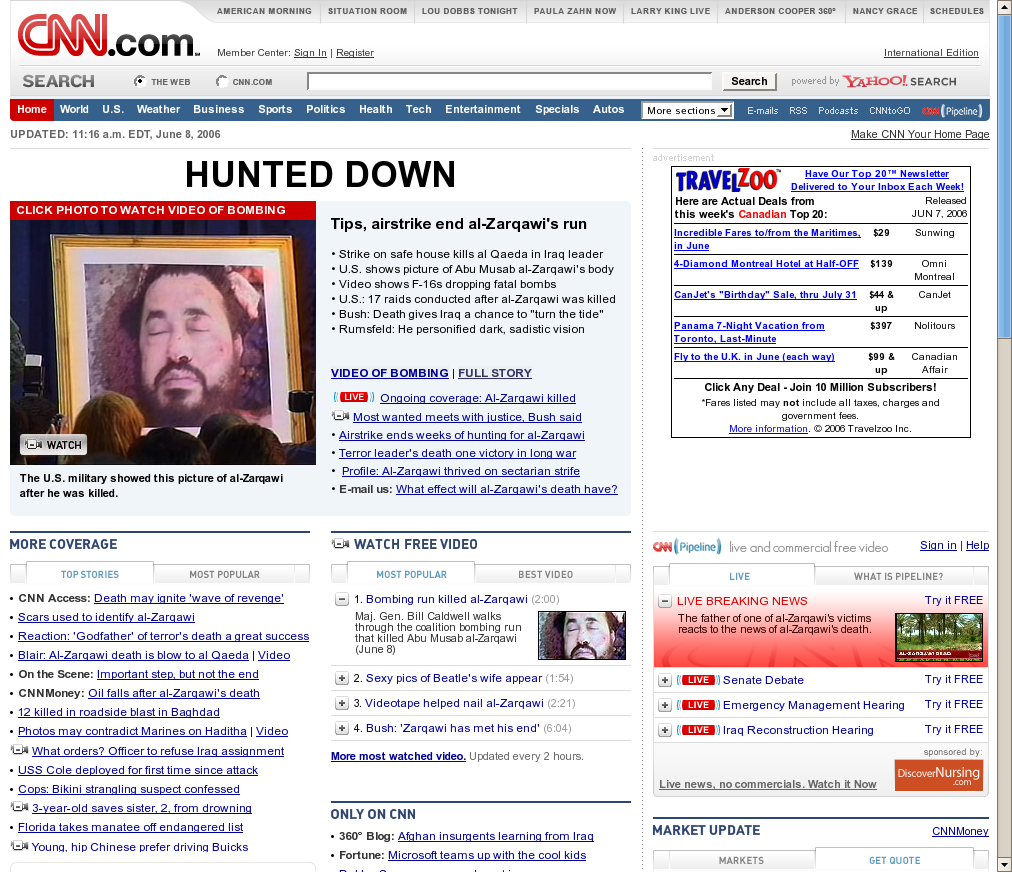
Por cá já nos vamos habituando à informação sensacionalista da nossa comunicação social, principalmente TV's. Mas nos EUA esse é um prato que já se serve diariamente há muito tempo. Sobre a morte de al-Zarqawi, Acts of Volition tem um post que mostra bem a sociedade a americana...
Este tema fez-me recuperar um artigo que li recentemente com o título: Media Literacy and Technology in a Media-Saturated Democracy.
E ainda... via PontoMedia este link:
7.6.06
6.6.06
Somos cidadãos ou utilizadores?
Esta noite deparei-me com este post, pertinente para o meu trabalho, no excelente Blog da Involve.
Do ponto de vista da eDemocracia ou em qualquer sociedade somos cidadãos.
Mas grande parte dos estudos efectuados nesta matéria baseiam-se nas redes sociais estabelecidas na Web 2.0 que tratam todos por utilizadores, mesmo que reconhecendo a sua capacidade em expor a sua personalidade na web com a ajuda das novas ferramentas de engagement (perdoem-me o palavrão).
Quem quiser oferecer o seu ponto de vista nesta matéria... please feel free!
Do ponto de vista da eDemocracia ou em qualquer sociedade somos cidadãos.
Mas grande parte dos estudos efectuados nesta matéria baseiam-se nas redes sociais estabelecidas na Web 2.0 que tratam todos por utilizadores, mesmo que reconhecendo a sua capacidade em expor a sua personalidade na web com a ajuda das novas ferramentas de engagement (perdoem-me o palavrão).
Quem quiser oferecer o seu ponto de vista nesta matéria... please feel free!
Links: 06/06/2006
Um site:
Participation Works
Um wiki:
Sustainable Community Action
Uma Pós-Graduação:
International Centre for Participation Studies
Um Blog:
Read/Write Web
Participation Works
Um wiki:
Sustainable Community Action
Uma Pós-Graduação:
International Centre for Participation Studies
Um Blog:
Read/Write Web
Stanford e Silicon Valley
A Universidade de Stanford realizou um estudo sobre o seu impacto. desde o início do século passado, na construção da àrea a que hoje chamamos Silicon Valley. Deixo-vos o resumo que vale a pena ler, e o link para o .pdf.:
"Abstract: This study examines the role of Stanford University in the transformation from the Valley of Heart's Delight to the Silicon Valley. At the dawn of the Twentieth Century, California's Santa Clara County was an agricultural paradise. Because of the benign climate and thousands of acres of fruit orchards, the area became known as the Valley of Heart's Delight.
In the early 1890's, Leland and Jane Stanford donated land in the valley to build a university in memory of their son. Thus, Leland Stanford, Jr., University was founded.
In the early 1930's, there were almost no jobs for young Stanford engineering graduates. This was about to change. Although there was no organized plan to help develop the economic base of the area around Stanford University, the concern about the lack of job opportunities for their graduates motivated Stanford faculty to begin the chain of events that led to the birth of Silicon Valley.
Stanford University's role in the transformation of the Valley of Heart's Delight into Silicon Valley is history, but it is enduring history. Stanford continues to effect the local economy by spawning new and creative ideas, dreams, and ambitions."
From the Valley of Heart's Delight to the Silicon Valley: A Study of Stanford University's Role in the Transformation
"Abstract: This study examines the role of Stanford University in the transformation from the Valley of Heart's Delight to the Silicon Valley. At the dawn of the Twentieth Century, California's Santa Clara County was an agricultural paradise. Because of the benign climate and thousands of acres of fruit orchards, the area became known as the Valley of Heart's Delight.
In the early 1890's, Leland and Jane Stanford donated land in the valley to build a university in memory of their son. Thus, Leland Stanford, Jr., University was founded.
In the early 1930's, there were almost no jobs for young Stanford engineering graduates. This was about to change. Although there was no organized plan to help develop the economic base of the area around Stanford University, the concern about the lack of job opportunities for their graduates motivated Stanford faculty to begin the chain of events that led to the birth of Silicon Valley.
Stanford University's role in the transformation of the Valley of Heart's Delight into Silicon Valley is history, but it is enduring history. Stanford continues to effect the local economy by spawning new and creative ideas, dreams, and ambitions."
From the Valley of Heart's Delight to the Silicon Valley: A Study of Stanford University's Role in the Transformation
5.6.06
Já se pensa na Web 3.0! I
Tal como dizia num post anterior, há já quem vá pensando na Web 3.0.
Esta semana a revista ÚNICA do Expresso traz mais um artigo de Paulo Querido com o título "Web 3.0: a rede capaz de discernir". O artigo aborda basicamente a apresentação que Tim Berners-Lee (Sir por sua majestade) o inventor da World Wide Web, levou a Edimburgo sobre o tema. Berners-Lee, também na qualidade de membro do W3C mostrou o trabalho que está a ser feito pelo consórcio que governa a Web na antecipação à rede semântica que incluirá objectos, e cada vez mais móvel e ubíqua, na qual a informação georeferenciada será cada vez mais optimizada para a comunicação.
Sobre redes de objectos, é sempre interessante ver o trabalho de Nicolas Nova do Politécnico de Lausanne.
E existem já capitais de risco a apostar em empresas para a Web 3.0! (ver links)
Deixo aqui os links que Paulo Querido indica no artigo original:
http://www.2006.org
http://www.w3.org/2001/sw/
http://en.wikipedia.org/wiki/Semantic_web
http://www.2006.org/media/#audio
http://news.bbc.co.uk/2/hi/technology/5019394.stm
E mais este:
http://www.iht.com/articles/2006/05/23/business/web.php
Esta semana a revista ÚNICA do Expresso traz mais um artigo de Paulo Querido com o título "Web 3.0: a rede capaz de discernir". O artigo aborda basicamente a apresentação que Tim Berners-Lee (Sir por sua majestade) o inventor da World Wide Web, levou a Edimburgo sobre o tema. Berners-Lee, também na qualidade de membro do W3C mostrou o trabalho que está a ser feito pelo consórcio que governa a Web na antecipação à rede semântica que incluirá objectos, e cada vez mais móvel e ubíqua, na qual a informação georeferenciada será cada vez mais optimizada para a comunicação.
Sobre redes de objectos, é sempre interessante ver o trabalho de Nicolas Nova do Politécnico de Lausanne.
E existem já capitais de risco a apostar em empresas para a Web 3.0! (ver links)
Deixo aqui os links que Paulo Querido indica no artigo original:
http://www.2006.org
http://www.w3.org/2001/sw/
http://en.wikipedia.org/wiki/Semantic_web
http://www.2006.org/media/#audio
http://news.bbc.co.uk/2/hi/technology/5019394.stm
E mais este:
http://www.iht.com/articles/2006/05/23/business/web.php
4.6.06
As melhores coisas do mundo!
As melhores coisas do mundo variam muito entre pessoas...
Mas de que é que TODOS gostam mais? nas mais variadas categorias - mesmo aquelas que nunca pensaríamos que existissem?
The Best Stuff in the World reúne essas escolhas colectivas e eu revejo-me em algumas, como por exemplo a série LOST ser uma das melhores!:) Mas concordo ainda mais com a melhor banda do mundo: RADIOHEAD! yeah!
Mas de que é que TODOS gostam mais? nas mais variadas categorias - mesmo aquelas que nunca pensaríamos que existissem?
The Best Stuff in the World reúne essas escolhas colectivas e eu revejo-me em algumas, como por exemplo a série LOST ser uma das melhores!:) Mas concordo ainda mais com a melhor banda do mundo: RADIOHEAD! yeah!
2.6.06
Links: 02/06/2006
MySociety
"mySociety builds websites which give people simple, tangible benefits in the civic and community aspects of their lives."
OpenDemocracy
"openDemocracy is the leading independent website on global current affairs - free to read, free to participate, free to the world..."
"mySociety builds websites which give people simple, tangible benefits in the civic and community aspects of their lives."
OpenDemocracy
"openDemocracy is the leading independent website on global current affairs - free to read, free to participate, free to the world..."
1.6.06
Links: 01/06/2006
Involve
"Involve exists to put people at the heart of decision-making. We believe public participation can help solve some of our most pressing challenges and lead to the genuine empowerment of people."
the cluetrain manifesto
"A powerful global conversation has begun. Through the Internet, people are discovering and inventing new ways to share relevant knowledge with blinding speed. As a direct result, markets are getting smarter—and getting smarter faster than most companies."
Partnerships Online
Designing for Civil Society
International Centre of Excellence for Local eDemocracy
"New technology has the power to change the way in which councils engage and work with their citizens: local eDemocracy can open the door to a genuine, two-way dialogue and deliver democratic renewal from the grass roots up."
IDEOLOGI
"Involve exists to put people at the heart of decision-making. We believe public participation can help solve some of our most pressing challenges and lead to the genuine empowerment of people."
the cluetrain manifesto
"A powerful global conversation has begun. Through the Internet, people are discovering and inventing new ways to share relevant knowledge with blinding speed. As a direct result, markets are getting smarter—and getting smarter faster than most companies."
Partnerships Online
Designing for Civil Society
International Centre of Excellence for Local eDemocracy
"New technology has the power to change the way in which councils engage and work with their citizens: local eDemocracy can open the door to a genuine, two-way dialogue and deliver democratic renewal from the grass roots up."
IDEOLOGI
31.5.06
Inovação Aberta I
No seguimento do post de dia 22, em que falei do artigo no jornal Público sobre o desenvolvimento da Inovação Aberta nas grandes empresas, nas quais agentes externos contribuem para a criação de novos produtos, o chamado Connect&Develop.
Hoje tive a notícia de que a Amazon também já faz o mesmo. A Amazon decidiu lançar um concurso aberto a todos, e que a avaliar pela lista de premiados, teve óptimos resultados!... Mas pergunto o que irá acontecer aos cientistas, engenheiros, etc que trabalham em I&D nas grandes empresas?
Mas mais grave ainda é que o público quererá mais facilmente contribuir com novas ideias para grandes empresas globais!... e as pequenas empresas? terão de continuar a investir elas próprias em I&D? Desta forma, os mais ricos serão cada vez mais ricos e vice-versa!
Hoje tive a notícia de que a Amazon também já faz o mesmo. A Amazon decidiu lançar um concurso aberto a todos, e que a avaliar pela lista de premiados, teve óptimos resultados!... Mas pergunto o que irá acontecer aos cientistas, engenheiros, etc que trabalham em I&D nas grandes empresas?
Mas mais grave ainda é que o público quererá mais facilmente contribuir com novas ideias para grandes empresas globais!... e as pequenas empresas? terão de continuar a investir elas próprias em I&D? Desta forma, os mais ricos serão cada vez mais ricos e vice-versa!
Há Vida Na Web
Esta semana Nuno Markl voltou a surpreender-me. Através do seu programa Há Vida em Markl, que eu ouço em podcast, deu a conhecer dois sites muito interessantes:
MyHeritage: Este site tem uma aplicação que analisa as feições da nossa cara, através de uma foto que nós enviamos por upload, e mostra-nos uma lista de celebridades parecidas connosco! É muito divertido!...
Google Trends: Este, saídinho do Google Labs, mostra-nos quais as palavras mais pesquisadas pelo motor de busca principal do Google e em que parte do globo. O Markl descobriu que a Soraia Chaves é mais pesquisada do que ele pelo pessoal de... Linda-A-Velha! :)
No passado o Markl já tinha divulgado também o Pandora.com, um site de pesquisa de músicas, onde cada um pode criar uma rádio pessoal.
MyHeritage: Este site tem uma aplicação que analisa as feições da nossa cara, através de uma foto que nós enviamos por upload, e mostra-nos uma lista de celebridades parecidas connosco! É muito divertido!...
Google Trends: Este, saídinho do Google Labs, mostra-nos quais as palavras mais pesquisadas pelo motor de busca principal do Google e em que parte do globo. O Markl descobriu que a Soraia Chaves é mais pesquisada do que ele pelo pessoal de... Linda-A-Velha! :)
No passado o Markl já tinha divulgado também o Pandora.com, um site de pesquisa de músicas, onde cada um pode criar uma rádio pessoal.
30.5.06
Usabilidde é como àgua a correr montanha abaixo!

Este gráfico é de um blog que acaba de entrar no Top100 do Technorati, mas os autores dizem que não percebem porquê essa subida... eu atribuo esse feito a uma escrita com muito humor e muita inteligência. Chama-se Creating Passionate Users :)
o e-mail não transporta tom de voz
Algo de que já se vinha falando, mas agora reforçado por um artigo da American Psychological Association. Os e-mails de facto não transportam expressões faciais e tons de voz, que são uma grande parte da comunicação. Por isso não utilize este meio para fazer comunicações importantes ao seu chefe ou à namorada! :)
Usabilidade na Seara
Fui parar ao site da Seara.com e verifiquei que eles têm algumas preocupações com Usabilidade, no seu site podemos ler uma série de dicas sobre esta matéria.
Também acrescentei 5 novos links sobre Usabilidade na coluna da direita.
Também acrescentei 5 novos links sobre Usabilidade na coluna da direita.
29.5.06
Conferência: "We Media 2006"
Decorreu em Londres no início do mês de Maio, e pelo atraso as minhas desculpas. Mas vale a pena visitar o site e procurar mais informações úteis.
A Web 2.0 explicada aos leitores

O jornal Público tem sido um dos orgãos de informação mais atento ao fenómeno Web 2.o - assim baptizado por Tim O'Reilly - e à Web Social. No suplemento de economia "DIA D" de hoje (sai à 2ª feira), surge uma pequena rubrica - DESCOMPLICADOR - assinada por Jaime Fidalgo sobre o que é a Web 2.0?, como nasceu? e quais são os melhores exemplos?.
Só é pena que Jaime Fidalgo se tenha enganado no nome do autor que cunhou o termo, é Tim e não Tom, de resto: cinco estrelas!
Usability Body of Knowledge
A inteligência colectiva de todos os peritos na àrea da Usabilidade, pode agora ser reunida num sistema "vivo" e "orgânico" de conhecimento e evolução sobre esta àrea, onde todos poderão dar o seu contributo.
"The Usability Body of Knowledge (BoK) project is dedicated to creating a living reference that represents the collective knowledge of the usability profession."
"The Usability Body of Knowledge (BoK) project is dedicated to creating a living reference that represents the collective knowledge of the usability profession."
28.5.06
Casas de contentores de carga


Formas de nomadismo, novos projectos de habitação, reciclagem...
Numa sociedade em que cada vez é necessária mais mobilidade, mais habitação e maiores níveis de reciclagem, transformar velhos contentores de carga em apartamentos parece-me uma óptima ideia.
26.5.06
OpenBusiness
Enquanto uns discutem o sexo dos anjos, a Web 3.0, outros só pensam em fazer negócio com a Web 2.0. Aqui poderão encontrar-se trocas de experiências sobre novos modelos de negócio ligados à Web Social ou influenciados pelo movimento Open Source.
25.5.06
Já se pensa na Web 3.0!
Através do Ponto Media, de António Granado tive acesso a este artigo do International Herald Tribune sobre a discussão em torno da próxima etapa da Web.
"Just when the ideas behind "Web 2.0" are starting to enter into the mainstream, the mass of brains behind the World Wide Web is introducing pieces of what may end up being called Web 3.0."
"People keep asking what Web 3.0 is,” Berners-Lee said. “I think maybe when you’ve got an overlay of scalable vector graphics - everything rippling and folding and looking misty - on Web 2.0 and access to a semantic Web integrated across a huge space of data, you’ll have access to an unbelievable data resource.”
"Just when the ideas behind "Web 2.0" are starting to enter into the mainstream, the mass of brains behind the World Wide Web is introducing pieces of what may end up being called Web 3.0."
"People keep asking what Web 3.0 is,” Berners-Lee said. “I think maybe when you’ve got an overlay of scalable vector graphics - everything rippling and folding and looking misty - on Web 2.0 and access to a semantic Web integrated across a huge space of data, you’ll have access to an unbelievable data resource.”
24.5.06
Comunidade de Jogos Portuguesa está mais rica
Foi inaugurado no passado dia 22 de Maio o novo blog de Pedro Silva dedicado à LUDOLOGIA.
Participe!
http://ludologia.blogs.ca.ua.pt
Participe!
http://ludologia.blogs.ca.ua.pt
22.5.06
Inovação aberta...
No seguimento do post anterior sobre o novo livro de António Machuco Rosa destaco no Público de hoje um artigo por Pedro Oliveira, sobre a forma como as maiores empresas que investiam em I&D internamente estão a adaptar-se a novos cenários, com o recurso ao C&D (Connect & Develop), baixando os custos e aumentando os resultados dessa investigação, graças às ferramentas de colaboração.
"No paradigma tradicional, acreditava-se que a inovação exigia um controlo cerrado de todo o conhecimento e dos activos necessários para a inovação (..) As empresas fechavam-se sobre si próprias e o secretismo era uma das importantes componentes do sucesso."
"No paradigma tradicional, acreditava-se que a inovação exigia um controlo cerrado de todo o conhecimento e dos activos necessários para a inovação (..) As empresas fechavam-se sobre si próprias e o secretismo era uma das importantes componentes do sucesso."
18.5.06
5 Lições Sobre Comunicação
"5 Liçoes Sobre Comunicação, Redes e Tecnologia da Informação. Da Cibernética ao Copyright" é este o título do livro escrito por António Machuco Rosa e editado pela Nova Vega, numa colecção dirigida por José Bragança de Miranda. No 5º capítulo, ou 5ª lição se quiserem, o autor trata de um tema que me interessa, ou seja, porque é que o estado natural de uma ideia é o da liberdade e porque é que as ideias devem fluir livremente... entre mentes! e de que forma contribui para a democracia das sociedades!!!?
“… o meu usufruto de uma ideia em nada faz diminuir a ‘quantidade’ da ideia disponível. Por isso, as ‘ideias’ não podem ser apropriadas; são infinitamente divisíveis. Devido a essa não-rivalidade, pode afirmar-se com rigor que o seu estado natural é de liberdade, sendo absurdo invocar certos ‘direitos naturais’ de propriedade.” Machuco Rosa. (190: 2006).
“… o meu usufruto de uma ideia em nada faz diminuir a ‘quantidade’ da ideia disponível. Por isso, as ‘ideias’ não podem ser apropriadas; são infinitamente divisíveis. Devido a essa não-rivalidade, pode afirmar-se com rigor que o seu estado natural é de liberdade, sendo absurdo invocar certos ‘direitos naturais’ de propriedade.” Machuco Rosa. (190: 2006).
15.5.06
Usabilidade nos gadgets
"Technology firms are being targeted in a bid to make hardware and software easier to use for everyone."
10.5.06
SHIFT06
Depois do LIFT06 em Fevereiro último, que decorreu em Genebra, agora é a vez de Lisboa receber o SHIFT06. Organizado por investigadores portugueses, este é um evento que já fazia falta no nosso país, colocando assim Portugal no mapa do debate em torno da faceta social da WEB2.0.
Nas palavras de Hugo Neves da Silva, um dos organizadores, "... era importante criar um evento em Portugal no qual se debatesse as importantes mudanças que se estão a verificar na área das novas tecnologias e o peso cada vez maior que as tecnologias tem nas nossas vidas, com os consequentes impactos positivos e negativos na sociedade actual."
Nas palavras de Hugo Neves da Silva, um dos organizadores, "... era importante criar um evento em Portugal no qual se debatesse as importantes mudanças que se estão a verificar na área das novas tecnologias e o peso cada vez maior que as tecnologias tem nas nossas vidas, com os consequentes impactos positivos e negativos na sociedade actual."
5.5.06
Blogues que dão dinheiro...
O suplemento Dinheiro & Ócio do jornal Diário Económico, apresenta esta semana um artigo, sobre como tirar algum rendimento dos blogues.
4.5.06
26.4.06
Social search getting hot at Yahoo
Bradley Horowitz é o VP da Yahoo para a investigação em Web Social. Neste video podemos assistir a uma pequena entrevista, em que Bradley aponta alguns objectivos da Yahoo, que já tem uma versão beta de um motor de busca social, o My Web 2.0
"Yahoo's efforts to build out social search is gaining "critical mass," says Product Strategy VP Bradley Horowitz. He talks with Bambi Francisco about monetizing these efforts and how the company is well-positioned to get into the video-uploading service game."
"Yahoo's efforts to build out social search is gaining "critical mass," says Product Strategy VP Bradley Horowitz. He talks with Bambi Francisco about monetizing these efforts and how the company is well-positioned to get into the video-uploading service game."
Receiver #15
Mais um número da Receiver, o 15º, com edição online pela Vodafone. A mesma qualidade a que nos tem habituado...
19.4.06
Social Networking's Gold Rush
Agora lido na BusinessWeek Online:
"So with each passing month, investors, big media companies, and advertisers are being forced to seriously consider whether social networking sites can have a viable long-term business model. Whether or not there's a future for social networking, players that are high on the sector's prospects, or simply don't want to miss out on its potential, are pouring in serious money"
"Facebook, a site for college and high-school students, plans to announce Apr. 19 that it has raised $25 million in its latest round of funding from venture-capital firms. That same day, Rupert Murdoch's News Corp. (NWS), is expected to announce that it is taking a minority stake in SimplyHired, a job-hunting site with a strong social-networking component."
"So with each passing month, investors, big media companies, and advertisers are being forced to seriously consider whether social networking sites can have a viable long-term business model. Whether or not there's a future for social networking, players that are high on the sector's prospects, or simply don't want to miss out on its potential, are pouring in serious money"
"Facebook, a site for college and high-school students, plans to announce Apr. 19 that it has raised $25 million in its latest round of funding from venture-capital firms. That same day, Rupert Murdoch's News Corp. (NWS), is expected to announce that it is taking a minority stake in SimplyHired, a job-hunting site with a strong social-networking component."
"F for fast": Como lemos no ecrã!?
"In an eyetracking study, Jakob Nielsen found that users often scan content on web pages in an F-shaped pattern:
- First, people scan in a horizontal movement across the upper part of the content area
- Secondly, in a shorter horizontal movement further down the page
- Finally, in a vertical movement along the content's left side
According to Jakob Nielsen the F-pattern behaviour shows that:
- People don't read text thoroughly
- The most important information should be at the top
- Headings and paragraphs must start with information-carrying words that users will notice when they scan down the left side of the content"
Artigo
17.4.06
Microsoft Social
Através do site domelhor.net do jornalista Paulo Querido, fui ler uma notícia na BusinessWeek Online sobre os novos desenvolvimentos da Microsoft na àrea da computação social, a ideia é criar um motor de busca à semelhança do Google que utiliza o algoritmo PageRank:
"MSN Search division on a comeback tour. The next stop: Social search, a way of making Web search more relevant by incorporating the preferences of like-minded Net surfers."
Flood Maps
Com informação proveniente do Google Maps, esta aplicação é preciosa para a compreensão dos resultados de uma possível inundação do planeta com o degelo dos polos. No Flood Mapsconstatei que a península de Tróia desapareceria... Mas àparte o cenário de catástrofe, o post no blog Social Signal apresenta-nos esta e outras aplicações que se servem de informação retirada de outras aplicações existentes na web para a sintetizar, criando novos serviços. Viva a Web 2.0! :)
Mas para conhecer mais destas Web 2.0 Mashups o melhor é visitar Programmable Web:
"The site maps nearly 600 mashups by plotting 78 Web 2.0 sites against each other (kind of like one of those distance finders you see on a road map). It's incredibly addictive... and an inspirational snapshot of some of the innovative energy out there on the new web."
Mas para conhecer mais destas Web 2.0 Mashups o melhor é visitar Programmable Web:
"The site maps nearly 600 mashups by plotting 78 Web 2.0 sites against each other (kind of like one of those distance finders you see on a road map). It's incredibly addictive... and an inspirational snapshot of some of the innovative energy out there on the new web."
14.4.06
Interfaces que dão e recebem conselhos!
Henry Lieberman do MIT é o autor de Interfaces That Give and Take Advice. Sobre os interfaces que possuem um sistema de aconselhamento ou sugestão, temos o exemplo da Amazon.com e ainda o Pandora.com, que por sua vez se dedica a recolher informações dos utilizadores sobre os seus gostos musicais, informação essa que pode ser aplicada em sistemas como o da Amazon na venda/sugestão de música online.
13.4.06
Folksonomy
Thomas Vander Wal cunhou o termo "folksonomy" em 2004, agora explica-nos a diferença entre a Banda estreita e a Banda Larga em folksonomies, no seu blog em vanderwal.net. Como exemplos entre os dos dois tipos de folksonomias (perdoem-me a tradução livre!), o autor dá o del.icio.us como banda larga e o Flickr para o segundo caso.
6.4.06
The new blogocracy
Danah Boyd, de quem já aqui falei, é autora de um artigo sobre a presença de bloggers na convenção do partido democrático, e o buzz gerado nos mass media.
"As a practice, journalism espouses an air of objectivity, purporting to cover all sides of a debate, equally and with emotional distance. While few believe that journalists are unbiased, it is considered a respectable aim of the profession and readers expect them to be as objective as possible. Bloggers, on the other hand, have no such cultural code and their readers rarely hold them accountable for objectivity. In fact, what makes blogging confusing for many is that the practices encompassed by that term are quite diverse."
"Bloggers at the Democratic National Convention signify a shift in media, but not a replacement for mainstream coverage. Their role will be to fill in the gaps, expose the underlying magic, and keep everyone on their toes. What they are doing cannot be compared to journalism; it can only be described as blogging."
"As a practice, journalism espouses an air of objectivity, purporting to cover all sides of a debate, equally and with emotional distance. While few believe that journalists are unbiased, it is considered a respectable aim of the profession and readers expect them to be as objective as possible. Bloggers, on the other hand, have no such cultural code and their readers rarely hold them accountable for objectivity. In fact, what makes blogging confusing for many is that the practices encompassed by that term are quite diverse."
"Bloggers at the Democratic National Convention signify a shift in media, but not a replacement for mainstream coverage. Their role will be to fill in the gaps, expose the underlying magic, and keep everyone on their toes. What they are doing cannot be compared to journalism; it can only be described as blogging."
G/localization: When Global Information and Local Interaction Collide
A construção de comunidades online tem vindo a ser cada vez mais importante para as empresas que querem ter uma presença forte na Internet. Danah Boyd fez uma apresentação muito boa sobre este assunto, e o texto está disponível no seu site.
"Designers who work with networks must face these tensions and design to take advantage of the global while not destroying the local. This is a hefty challenge and one that i want us to dive into."
"The digital era has allowed us to cross space and time(...)Yet, people don't live in a global world - they are more concerned with the cultures in which they participate."
"Today, we are trying to build a whole new level of social communities. Some folks are building more open social platforms so that participants can modify the structures to meet their own needs."
Danah Boyd apresenta Craigslist, Flickr e MySpace como exemplo de comunidades que cresceram organicamente:
"They all grew organically. They each have public personalities that early adopters feel connected to. The early adopters really felt as though they were participating in and creating an intimate community, even as the community grew to millions. Users are passionate. Designers are passionate."
"Designers who work with networks must face these tensions and design to take advantage of the global while not destroying the local. This is a hefty challenge and one that i want us to dive into."
"The digital era has allowed us to cross space and time(...)Yet, people don't live in a global world - they are more concerned with the cultures in which they participate."
"Today, we are trying to build a whole new level of social communities. Some folks are building more open social platforms so that participants can modify the structures to meet their own needs."
Danah Boyd apresenta Craigslist, Flickr e MySpace como exemplo de comunidades que cresceram organicamente:
"They all grew organically. They each have public personalities that early adopters feel connected to. The early adopters really felt as though they were participating in and creating an intimate community, even as the community grew to millions. Users are passionate. Designers are passionate."
5.4.06


João Garcia Bloga
A iniciativa é boa, e outros aventureiros portugueses já o fizeram anteriormente. O alpinista João Garcia tem um blog na siconline, mas até agora os posts são da autoria do jornalista Aurélio Faria. Seria interessante ter o João na primeira pessoa, senão para quê um Blog!?...

Novo livro lançado no Abrupto
Saludo desde já a iniciativa de Agustina Bessa Luis, em fazer um pré-lançamento do seu novo livro no Blog Abrupto, de Pacheco Pereira.
31.3.06
Tagging
O tagging vem sendo cada vez mais utilizado como forma de classificação de conteúdos. Estes por sua vez deixam de respeitar uma hierarquia rígida, e passam a reflectir a forma como nós, humanos, "arrumamos" a informação na nossa mente. Se esta tendência continuar prevejo alguns dos profissionais da Arquitectura de Informação (AI) a perder os seus empregos, pois eles tratam exactamente de hierarquizar a informação.
No artigo sobre esta matéria também na MIT Technology Review, podemos ler (texto a bold inserido por mim):
"Without Google, Yahoo, and their brethren, using the Web would be like wandering through a library where a prankster has restacked the books at random..."
"Imagine instead being able to call on the group judgment of other users, people who are constantly skimming the latest Web content and arranging the best stuff into neatly labeled piles."
"It's called tagging, and it's going on at a handful of free websites--Delicious, Flickr, Furl, and Rojo, among others--where members are voluntarily classifying and categorizing thousands of pieces of content each day."
"...there's a twist that makes tagging a collectivist undertaking: everybody can see everybody else's tags."
"There's no uniformity to the way people tag Web pages, so the same tag might wind up being applied to very different kinds of content. But to most developers, that's actually a strength of the technology, not a weakness."
O Tag e o RSS serão, para já, duas tecnologias que têm ajudado a revolucionar os serviços electrónicos, com a vantagem de serem duas soluções muito simples do ponto de vista tecnológico.
No artigo sobre esta matéria também na MIT Technology Review, podemos ler (texto a bold inserido por mim):
"Without Google, Yahoo, and their brethren, using the Web would be like wandering through a library where a prankster has restacked the books at random..."
"Imagine instead being able to call on the group judgment of other users, people who are constantly skimming the latest Web content and arranging the best stuff into neatly labeled piles."
"It's called tagging, and it's going on at a handful of free websites--Delicious, Flickr, Furl, and Rojo, among others--where members are voluntarily classifying and categorizing thousands of pieces of content each day."
"...there's a twist that makes tagging a collectivist undertaking: everybody can see everybody else's tags."
"There's no uniformity to the way people tag Web pages, so the same tag might wind up being applied to very different kinds of content. But to most developers, that's actually a strength of the technology, not a weakness."
O Tag e o RSS serão, para já, duas tecnologias que têm ajudado a revolucionar os serviços electrónicos, com a vantagem de serem duas soluções muito simples do ponto de vista tecnológico.
As maravilhas do "photo sharing"
o BubbleShare é um novo rival do Flickr, e pelos vistos possui argumentos de peso para enfrentar o gigante da Yahoo, no armazenamento e partilha de fotos entre utilizadores, uma das novidades é o BubbleBar, descrito no artigo do MIT Technology Review
"The BubbleBar pulls images from your online BubbleShare albums and sends a parade of thumbnails down the side of your computer's desktop, like a filmstrip; placing your mouse over one of the thumbnails pulls up a larger version, along with captions and comments. But that's not all. The BubbleBar also watches for new albums published on BubbleShare by your acquaintances and downloads them automatically. So, if your photographer friends are sufficiently prolific, you can wake up to a new set of images every day, without lifting a finger."
"The BubbleBar pulls images from your online BubbleShare albums and sends a parade of thumbnails down the side of your computer's desktop, like a filmstrip; placing your mouse over one of the thumbnails pulls up a larger version, along with captions and comments. But that's not all. The BubbleBar also watches for new albums published on BubbleShare by your acquaintances and downloads them automatically. So, if your photographer friends are sufficiently prolific, you can wake up to a new set of images every day, without lifting a finger."
30.3.06
Wikipedia: Smart Mob
"The smart mob is a concept introduced by Howard Rheingold in his book Smart Mobs: The Next Social Revolution. According to Rheingold, smart mobs are an indication of the evolving communication technologies that will empower the people."
"A smart mob is a group that, contrary to the usual connotations of a mob, behaves intelligently or efficiently because of its exponentially increasing network links. This network enables people to connect to information and others, allowing a form of social coordination."
"...the smart mob is a practical implementation of collective intelligence. According to Rheingold, examples of smart mobs are the street protests organized by the anti-globalization movement."
"A smart mob is a group that, contrary to the usual connotations of a mob, behaves intelligently or efficiently because of its exponentially increasing network links. This network enables people to connect to information and others, allowing a form of social coordination."
"...the smart mob is a practical implementation of collective intelligence. According to Rheingold, examples of smart mobs are the street protests organized by the anti-globalization movement."
Wikipedia: Collective Intelligence
"...is a working form of intelligence which overcomes "groupthink" and individual cognitive bias in order to allow a collective to cooperate on one process—while maintaining reliable intellectual performance. In this context, it refers to robust consensus decision making, and may properly be considered a subfield of sociology"
"the capacity of a human community to evolve toward higher order complexity thought, problem-solving and integration through collaboration and innovation."
"the capacity of a human community to evolve toward higher order complexity thought, problem-solving and integration through collaboration and innovation."
Online Collaboration: What Are The Key Traits Of Ideal Online Collaborators?
Mais um excelente texto em Kolabora.com com o título Online Collaboration: What Are The Key Traits Of Ideal Online Collaborators?
"In reality, through the survey they have found out that trained, facilitated teams achieve more creative breakthroughs, faster, and are more likely to achieve extraordinary results, accomplishing things as a team that the individuals working individually could never have achieved."
"Collaboration can be hard work, since it requires us to think outside our 'frames' and see things from others' perspectives."
"To some extent that is the message that this survey gives us: Attitude is most important, and if we believe collaboration will succeed, it will, and if we don't, regardless of our group's skill, experience, and personality, it won't."
"In reality, through the survey they have found out that trained, facilitated teams achieve more creative breakthroughs, faster, and are more likely to achieve extraordinary results, accomplishing things as a team that the individuals working individually could never have achieved."
"Collaboration can be hard work, since it requires us to think outside our 'frames' and see things from others' perspectives."
"To some extent that is the message that this survey gives us: Attitude is most important, and if we believe collaboration will succeed, it will, and if we don't, regardless of our group's skill, experience, and personality, it won't."
Location-based games overview
Se alguém na Ydreams está a ler este post, talvez se interesse por este artigo:
Location-based games overview
Location-based games overview
Information versus Knowledge
Nicolas Nova faz uma recensão de um texto da Harvard Business Review, ao qual não tive acesso, mas que vale a pena reproduzir aqui. Basicamente demonstra a enorme diferença entre Informação e Conhecimento na Web:
“Several technological and political forces have converged, and that has produced a global, Web-enabled playing field that allows for multiple forms of collaboration without regard to geography or distance – or, soon, even language.”
"What’s the difference between information and knowledge? Information is a message, one-dimensional and bounded by its form: a document, an image, a speech, a genome, a recipe, a symphony score"
"Knowledge results from the assimilation and connecting of information through experience, most often through apprenticeship or mentoring."
"...global conversation is essential to achieving true democratization of knowledge. But simply giving everyone access to e-mail and Google will never in itself flatten the earth."
“Several technological and political forces have converged, and that has produced a global, Web-enabled playing field that allows for multiple forms of collaboration without regard to geography or distance – or, soon, even language.”
"What’s the difference between information and knowledge? Information is a message, one-dimensional and bounded by its form: a document, an image, a speech, a genome, a recipe, a symphony score"
"Knowledge results from the assimilation and connecting of information through experience, most often through apprenticeship or mentoring."
"...global conversation is essential to achieving true democratization of knowledge. But simply giving everyone access to e-mail and Google will never in itself flatten the earth."
Are bloggers authoritative sources at big companies?
Robert Scoble, autor do livro Naked Conversations, coloca uma questão no seu blog: Are bloggers authoritative sources at big companies?
28.3.06
Social Computing
A Technology Review tem também um dossier especial sobre computação social que vale a pena explorar...
The Evolution of IM
O Instant Messaging ainda é, ou cada vez mais, uma óptima ferramenta de colaboração, mas há umas que estão a evoluir mais que outras, segundo o artigo na Technology Review do MIT.
"Ideally, according to Gizmo's Robertson, people should be able to send instant messages or make an Internet phone call as easily as sending an e-mail message. Someone who uses Microsoft's free web-based Hotmail service, for instance, can transparently send messages to Yahoo Mail or Google's Gmail. This inter-operability dates back to the early days of the Internet, when all e-mail servers were designed to use the same protocol, Saint-Andre says.
IM, however, started out as proprietary software and has stayed that way. Robertson wants to change that with initiatives like Gizmo. "The world I'm trying to create is one in which you have one screen name that works everywhere, very similar to e-mail," he says. "That's not the way IM works today. It's a big mess."27.3.06
Visual Complexity
 Para quem gosta de mapas de sistemas complexos, sejam eles de transportes ou de comunicações, entre outros...
Visualcomplexity.com
24.3.06
Digital Media "empowering users"
Num artigo da BBC News, pude ler:
"the customer is king" is fast becoming the industry's new catchphrase.
"People want to connect to information and connect to their friends," he said. "The focus will be on highly personalised experiences."
"Collaborative usage of the internet is rising," said Jimmy Wales, the founder of Wikipedia, a free online encyclopaedia written by thousands of users. This is a social innovation, and not just a technological innovation,"
"...consumers of news from the media were transforming themselves into providers of information."
"Ms Twohill cited a recent quote from News Corporation boss Rupert Murdoch - "We tell you less, you tell us more." - to illustrate how some of the global media were engaging with the potential power of citizen journalism."
"the customer is king" is fast becoming the industry's new catchphrase.
"People want to connect to information and connect to their friends," he said. "The focus will be on highly personalised experiences."
"Collaborative usage of the internet is rising," said Jimmy Wales, the founder of Wikipedia, a free online encyclopaedia written by thousands of users. This is a social innovation, and not just a technological innovation,"
"...consumers of news from the media were transforming themselves into providers of information."
"Ms Twohill cited a recent quote from News Corporation boss Rupert Murdoch - "We tell you less, you tell us more." - to illustrate how some of the global media were engaging with the potential power of citizen journalism."
23.3.06
The Power Of Open Participatory Media And Why Mass Media Must Be Abandoned
Já com destaque no irrealTV e Ponto Media, este artigo é sem dúvida a não perder para se perceber a revolução em curso nos media tradicionais, com destaque para a falta de democracia do modelo actual de distribuição de media.
"In order to better understand the mass media's inherent lack of democracy, it is useful to imagine a communication system that allows and fosters participation by everyone."
Leia-se também a primeira parte deste artigo: Why Mass Media Are Bad: Weaknesses And Limitations Of Commercial Mainstream Media
"In order to better understand the mass media's inherent lack of democracy, it is useful to imagine a communication system that allows and fosters participation by everyone."
Leia-se também a primeira parte deste artigo: Why Mass Media Are Bad: Weaknesses And Limitations Of Commercial Mainstream Media
22.3.06
Weblogs. Diário de Bordo

Neste momento, estou a ler o Livro de Elisabete Barbosa e António Granado, para já com um bom prefácio de Manuel Pinto que enquadra muito bem o tema em questão, onde afirma:
"...é, sobretudo, a ideia que está na concepção dos blogs que é "revolucionária" e de um alcance indivídual e cívico repleto de potencialidades. Desde logo, porque abre terreno para a democratização do acesso à palavra, ao espaço público, ao enriquecimento da conversação social."
21.3.06
Kolabora.com
Uma excelente fonte para quem se interessa em estudar as novas ferramentas de colaboração online.
17.3.06
Entrevista a Jakob Nielsen
16.3.06
"A Newspaper and Citizen Journalism Reading List"
Um bom ponto de partida para quem, como eu, quer saber um pouco mais sobre Citizen Journalism, é esta lista de livros e artigos online. Da lista destaco We the Media de Dan Gillmor, que já está editado em português.
Link: A Newspaper and Citizen Journalism Reading List
Link: A Newspaper and Citizen Journalism Reading List
6.3.06
1 ano = 162 posts
Só hoje reparei que este Blog comemorou 1 ano no passado mês de Fevereiro!:)
Como sou distraído, venho com alguns dias de atraso assinalar a data. Quem acompanha o HCI-U (secalhar ninguém, :)), deve reparar que ao longo deste último ano abordei questões como a Usabilidade, Human-Computer Interaction, TV, Narratividade, Identidade, Location-Based Services, entre outros.
Por vezes olho para trás, e pergunto-me - Será que estou a construir um capital de conhecimento válido para o meu futuro!? - Bom, fico na dúvida, mas ando sempre a saltitar entre vários temas que me interessam, não consigo evitá-lo!.
Como já devem ter reparado, o nome HCI-U representa Human-Computer Interaction e Usabilidade, respetivamente... Mais tarde alterei o título no topo da página para "Human-Context Interaction / Useful", uma vez que já sentia a necessidade de ter um nome que se adequasse a temas mais variados.
Neste momento estou a preparar a tese num tema que acho fascinante, numa àrea que está a revolucionar a forma como se comunica e se produz informação, que são os Blogs - e outros meios - como ferramentas para aumentar o poder dos cidadãos, nivelar a sociedade horizontalmente, e criar conhecimento! Por outras palavras - Democracia! Espero que gostem.
Até já
BJ
Como sou distraído, venho com alguns dias de atraso assinalar a data. Quem acompanha o HCI-U (secalhar ninguém, :)), deve reparar que ao longo deste último ano abordei questões como a Usabilidade, Human-Computer Interaction, TV, Narratividade, Identidade, Location-Based Services, entre outros.
Por vezes olho para trás, e pergunto-me - Será que estou a construir um capital de conhecimento válido para o meu futuro!? - Bom, fico na dúvida, mas ando sempre a saltitar entre vários temas que me interessam, não consigo evitá-lo!.
Como já devem ter reparado, o nome HCI-U representa Human-Computer Interaction e Usabilidade, respetivamente... Mais tarde alterei o título no topo da página para "Human-Context Interaction / Useful", uma vez que já sentia a necessidade de ter um nome que se adequasse a temas mais variados.
Neste momento estou a preparar a tese num tema que acho fascinante, numa àrea que está a revolucionar a forma como se comunica e se produz informação, que são os Blogs - e outros meios - como ferramentas para aumentar o poder dos cidadãos, nivelar a sociedade horizontalmente, e criar conhecimento! Por outras palavras - Democracia! Espero que gostem.
Até já
BJ
TF1 lança canal para Bloggers
Segundo o jornal Público de hoje, a TF1 francesa prepara um canal, cujo os conteúdos serão programados por bloggers.
"Chama-se le.buzz e é apresentado como o projecto mais inovador da TF1 francesa na àrea da multimédia. Trata-se de canal de televisão realizado por bloggers a partir de conteúdos propostos pelos internautas."
"Chama-se le.buzz e é apresentado como o projecto mais inovador da TF1 francesa na àrea da multimédia. Trata-se de canal de televisão realizado por bloggers a partir de conteúdos propostos pelos internautas."
20.2.06
Web 2.0 - As Listas de Aplicações e Serviços
Este resumo não está disponível.
Clique aqui para ver a mensagem.
15.2.06
Don't potS Thinking About Tomorrow

"How human power is changing our society and business – and what this means for you and your company"
13.2.06
100 anos de Agostinho da Silva
Lembro-me, quando mais novo, ver aquela cara de sábio na TV. Barbas brancas, palavra fácil... e um programa que se chamava "Conversas Vadias" :)... o título do programa não podia ser melhor, agora que conheço um pouco mais da personalidade de Agostinho da Silva.
Tenho que ser honesto e admitir que nunca li nada dele, mas a partir de hoje sinto-me na obrigação de!
Tal como já li José Gil, ou já ouvi Carlos Paredes.
Coloco todos estes sob a mesma "tag"! se é que me faço entender!:
- Agostinho da Silva,
- José Gil,
- Pessoa,
- Eduardo Lourenço
- e Carlos Paredes - para mim Paredes, foi à sua maneira e com a sua arte, um visionário da cultura Portuguesa recente. Mas em vez de utilizar a palavra, utilizava a música.
Uns vivos, outros já não se encontram entre nós, mas estes autores mereciam mais destaque nos planos curriculares do Ministério da Educação e do Ensino Superior.
Tenho que ser honesto e admitir que nunca li nada dele, mas a partir de hoje sinto-me na obrigação de!
Tal como já li José Gil, ou já ouvi Carlos Paredes.
Coloco todos estes sob a mesma "tag"! se é que me faço entender!:
- Agostinho da Silva,
- José Gil,
- Pessoa,
- Eduardo Lourenço
- e Carlos Paredes - para mim Paredes, foi à sua maneira e com a sua arte, um visionário da cultura Portuguesa recente. Mas em vez de utilizar a palavra, utilizava a música.
Uns vivos, outros já não se encontram entre nós, mas estes autores mereciam mais destaque nos planos curriculares do Ministério da Educação e do Ensino Superior.
iTunes U - It all starts with learning...
"Apple shares common goals with education — to advance teaching, learning, and research through innovation, and engage and empower students. Students expect a campus environment that accommodates their digital lifestyle, adapts to their individual learning needs, and encourages collaboration and teamwork. Introducing a way to simplify and meet all these needs — iTunes U."


7.2.06
Pandora
Atrvés do podcast do Há Vida Em Markl, do Nuno Markl, aqui fica um projecto muito interessante feito sobre música. Basta seleccionar uma música e o sistema dá-nos uma rádio virtual com uma série de outras músicas com o mesmo "ADN".
Este projecto interessa-me porque é um bom exemplo de um sistema "human centered", o qual se adapta conforme as escolhas dos utilizadores.
Obrigado Markl
Este projecto interessa-me porque é um bom exemplo de um sistema "human centered", o qual se adapta conforme as escolhas dos utilizadores.
Obrigado Markl
Subscrever:
Mensagens (Atom)